
Signs a Child May Need Speech Therapy: A Parent Guide
You may notice that your child uses fewer words than expected, is difficult to understand, struggles to follow directions, or becomes frustrated when trying to communicate. Children develop speech and language skills at different rates, so one missed milestone or speech difference does not automatically mean a child has a disorder or needs therapy.
What matters more is the overall pattern and how communication affects everyday life. For families who have ongoing concerns, professional speech therapy on Long Island can help them better understand their child’s communication strengths and areas of difficulty. This guide explains the signs that may be worth discussing with a pediatrician or speech-language pathologist.
What Are the Signs a Child May Need Speech Therapy?
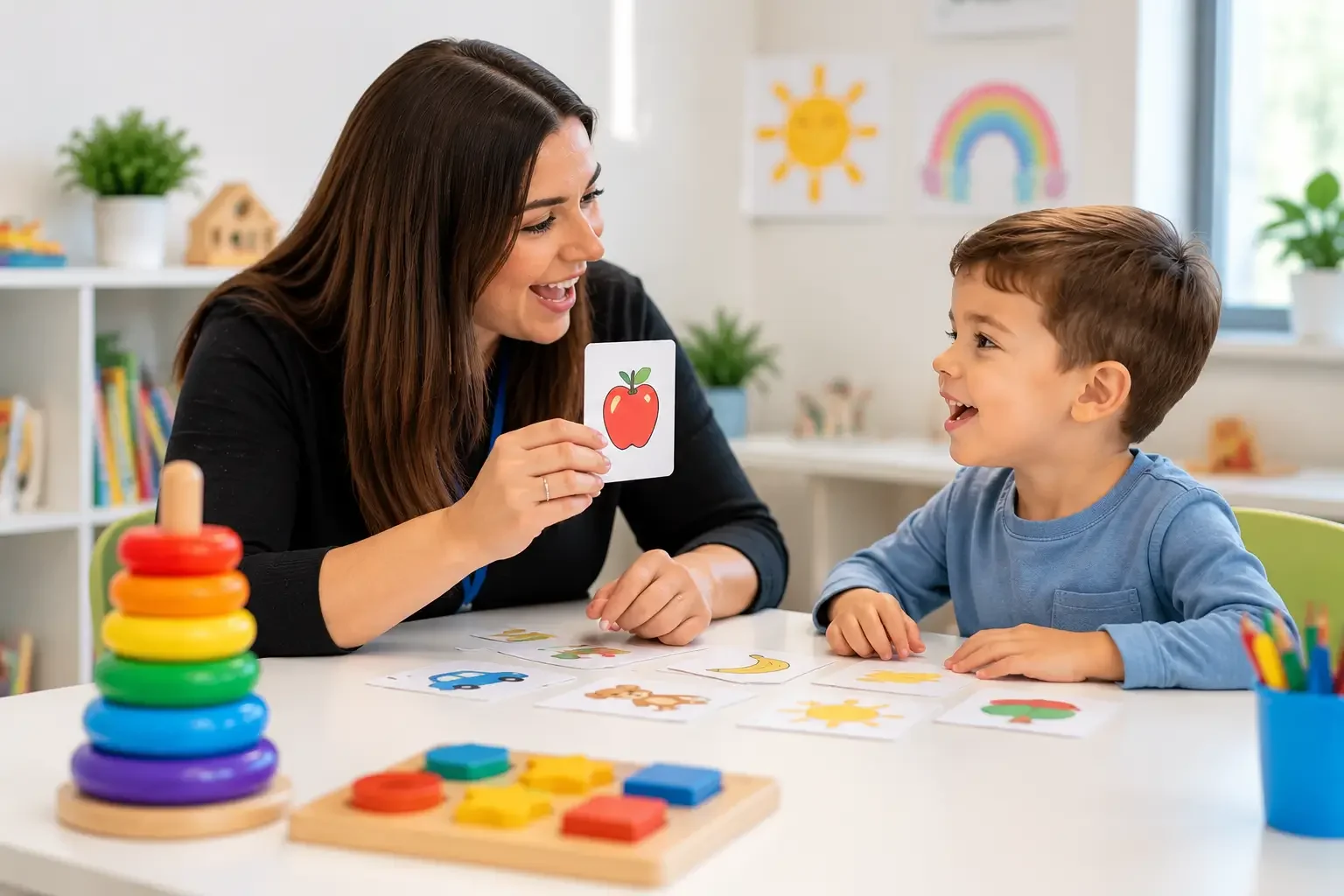
Signs that may warrant a speech-language evaluation include difficulty using or understanding language, speech that is unusually hard to understand for a child’s age, persistent difficulty producing sounds, frequent frustration when communicating, stuttering with noticeable struggle, or difficulty using language to interact with others.
Speech therapy is not only about pronunciation. Speech-language pathologists also look at how children understand language, express ideas, use speech sounds, speak fluently, and communicate with other people.
Signs worth discussing with a pediatrician or speech-language pathologist may include:
Using fewer words or word combinations than expected for the child’s developmental stage
Difficulty understanding questions or following age-appropriate directions
Speech that is difficult for familiar people or others to understand
Persistent difficulty producing speech sounds expected for the child’s age
Trouble putting thoughts into words or forming sentences
Frequent sound repetitions, pauses, or visible effort when speaking
Difficulty using language in conversation, such as taking turns or staying on topic
Losing speech or language skills the child previously used
What Is the Difference Between a Speech and Language Concern?
Speech and language are closely connected, but they are not the same. Speech refers to how a child produces sounds and words, including how clearly those sounds are spoken. Language refers to how a child understands and uses words and sentences to communicate ideas, needs, and experiences.
For example, a child may know exactly what they want to say but have difficulty producing certain sounds clearly. That is primarily a speech concern. Another child may pronounce sounds clearly but struggle to understand questions, learn new words, or put words together into sentences. Those difficulties relate more to language.
Some children have challenges in both areas. Understanding the difference can help parents describe what they are noticing more clearly when speaking with a pediatrician or speech-language pathologist.
What Speech and Language Skills Are Expected at Different Ages?
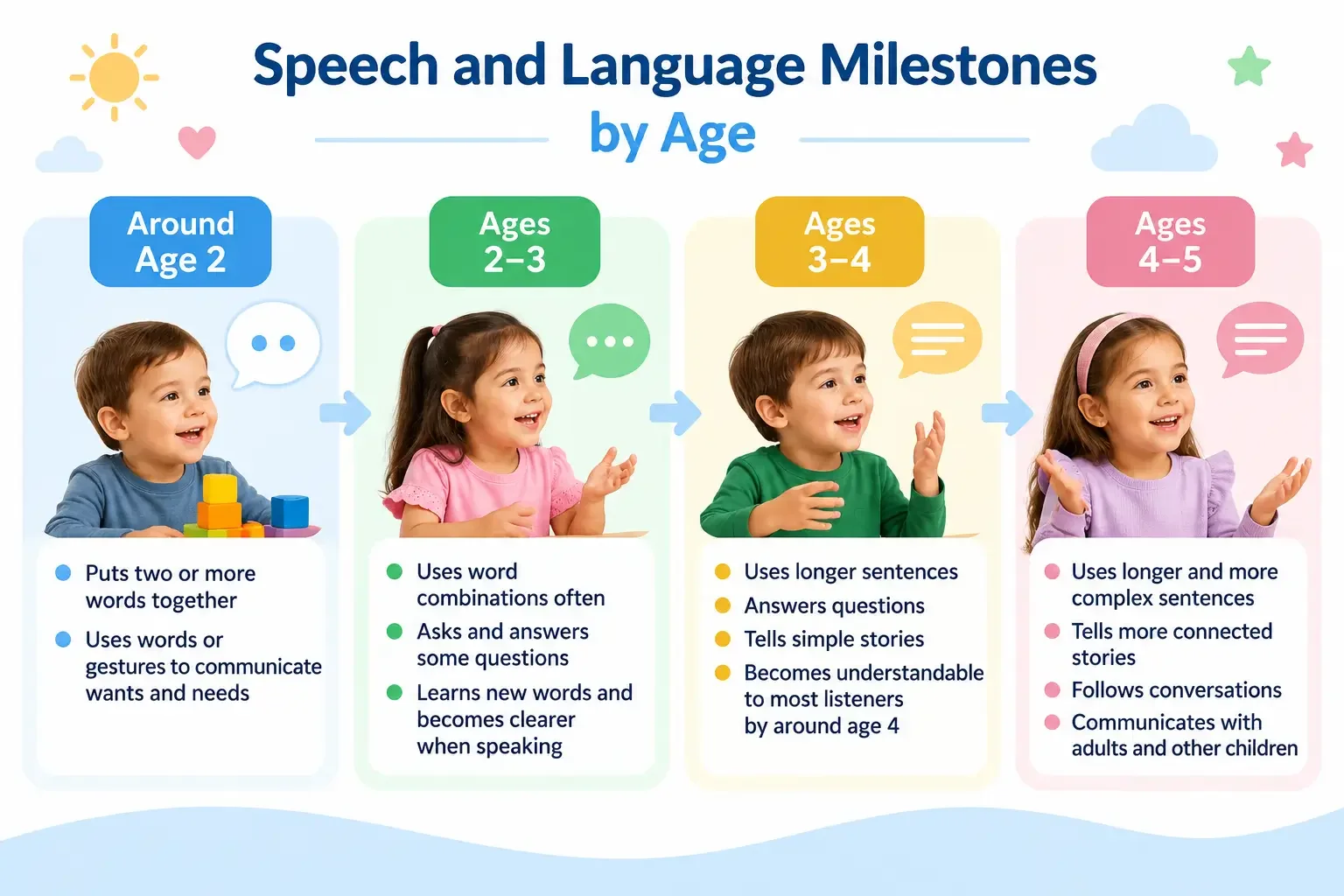
Speech and language skills develop across a range, and children may reach individual milestones at different times. Milestones can help parents understand what skills commonly emerge at each stage, but they are not pass-or-fail tests or diagnostic checklists.
| Age | Examples of Communication Skills to Watch For |
|---|---|
| Around age 2 | Putting two or more words together, following simple directions, and using words or gestures to communicate wants and needs. |
| Ages 2–3 | Using word combinations often, asking and answering some questions, learning new words, and becoming clearer when speaking. |
| Ages 3–4 | Using longer sentences, answering questions, telling simple stories, and becoming understandable to most listeners by around age 4. |
| Ages 4–5 | Using longer and more complex sentences, telling more connected stories, following conversations, and communicating with adults and other children. |
These examples provide reference points rather than strict deadlines. The American Speech-Language-Hearing Association recommends looking at the range of skills expected for a child’s age rather than focusing on one milestone in isolation. If a child is not developing many expected communication skills, is not gaining new skills, or loses skills they previously had, it may be worth seeking a professional evaluation.
When Is a Speech or Language Difference Worth a Closer Look?
Not every speech or language difference is a sign of a disorder. What matters more is whether the concern is persistent, affects several communication skills, or begins to interfere with everyday participation.
Parents may want to look more closely when:
Communication is noticeably difficult for the child’s developmental stage
The child often struggles to express needs, ideas, or feelings
Understanding questions or directions is consistently difficult
Speech or language challenges affect play, preschool, school, or social interaction
The child becomes frustrated because others have trouble understanding them
Teachers or other caregivers notice the same pattern
Children develop at different rates, so occasional difficulty is not unusual. Concerns become more meaningful when they continue over time or affect daily communication in more than one setting.
If a child loses speech or language skills they previously used, parents should discuss that change promptly with the child’s healthcare provider rather than simply waiting to see if the skills return.
Why Might a Child Have Speech or Language Difficulties?
There is no single cause of speech or language difficulty. Some children have a specific communication disorder, while others may have speech or language challenges alongside hearing, developmental, neurological, or structural differences. In some cases, the reason is not immediately clear.
Possible factors or conditions may include:
Hearing difficulties
Speech sound disorders
Developmental language disorder
Stuttering or other fluency difficulties
Motor speech disorders, including childhood apraxia of speech
Other developmental or medical conditions
Hearing is especially important because children need consistent access to speech sounds as language develops. If hearing is reduced or inconsistent, it can affect how a child learns and uses speech and language.
A speech delay alone does not reveal the underlying cause or diagnose another condition. A professional evaluation looks at the child’s overall communication skills and helps determine what may be contributing to the difficulty.
What Happens During a Speech-Language Evaluation?
A speech-language evaluation helps determine which communication skills are developing as expected, where difficulties are occurring, and whether additional support may be helpful.
Depending on the child’s age and concerns, the speech-language pathologist may:
Ask parents about the child’s communication and developmental history
Observe how the child communicates during conversation or play
Look at speech sound production and clarity
Evaluate how the child understands and uses language
Consider fluency or social communication when relevant
Use age-appropriate standardized assessments when appropriate
Review information from teachers or other caregivers
Because hearing can affect speech and language development, a hearing evaluation may also be recommended as part of the broader assessment process.
An evaluation does not automatically mean a child will need therapy. The findings help determine whether communication skills fall within an expected range, should be monitored, or may benefit from support.
What Can Parents Do to Support Communication at Home?
Parents can support communication by building language into everyday routines instead of turning practice into formal exercises.
Helpful strategies include:
Talk about what you and your child are doing during meals, play, bath time, or errands.
Read together and talk about the pictures, characters, and events in the story.
Respond to your child’s words, sounds, gestures, and other attempts to communicate.
Give your child time to respond instead of answering immediately.
Build on what your child says by adding a word or short phrase naturally.
Play and talk in the language or languages your family uses most comfortably.
These everyday interactions give children repeated opportunities to hear and use language in meaningful situations. If communication concerns are persistent or affecting daily life, home strategies should not replace a professional evaluation.
Frequently Asked Questions
-
Possible concerns at age 3 may include difficulty combining words to communicate, trouble answering or understanding simple questions, or speech that remains very difficult for others to understand. Development varies, so no single sign confirms a delay. The overall pattern of communication skills matters more than one milestone.
-
There is no single age when speech therapy should begin. Support can start when an evaluation identifies a speech, language, fluency, or communication need. Parents do not need to wait until a child reaches school age if they have ongoing concerns about communication development.
-
Some children make progress over time without formal therapy, while others continue to have communication difficulties. It is not always possible to predict which children will catch up based on observation alone. Persistent concerns, limited progress, or difficulties affecting everyday communication may warrant further evaluation.
-
A hearing evaluation may be appropriate because hearing difficulties can affect how children learn speech and language. Even mild or inconsistent hearing problems can make it harder to access speech sounds clearly. A healthcare or communication professional can help determine whether a hearing assessment should be part of the evaluation process.
Children develop speech and language skills at different rates, and one missed milestone or speech difference does not automatically mean a child has a communication disorder. What matters more is the overall pattern, including how well a child understands language, expresses ideas, speaks clearly, communicates fluently, and participates in everyday interactions.
If concerns continue, a professional evaluation can help clarify what is developing as expected and where support may be useful. For families seeking pediatric speech therapy on Long Island, A to Z Occupational & Speech Therapy provides speech screenings and therapy for children with communication needs.
